

Nationwide IT Asset Disposition Services: Secure, Compliant, and Value-Driven ITAD Solutions
In an increasingly digital world, the management of IT assets has become a critical concern for businesses of all sizes. Nationwide IT Asset Disposition (ITAD) services provide secure, compliant, and environmentally responsible solutions for the disposal of outdated or unused IT equipment. This article will explore the importance of ITAD services, the benefits of certified data destruction, and how these services contribute to sustainability and compliance with regulatory standards. As organizations face challenges related to data security and environmental impact, understanding the value of ITAD services is essential. We will delve into the mechanisms of ITAD, the benefits of asset recovery, and the logistics involved in nationwide ITAD services.
What Are Nationwide IT Asset Disposition Services and Why Are They Essential?
Nationwide IT Asset Disposition services encompass the secure and compliant disposal of IT equipment, ensuring that sensitive data is destroyed and that e-waste is recycled responsibly. These services are essential for businesses to mitigate risks associated with data breaches and environmental regulations. By utilizing ITAD services, organizations can protect their data, comply with legal requirements, and contribute to sustainability efforts.
Defining ITAD and Its Importance for Enterprises
ITAD refers to the processes involved in the disposal of obsolete or unwanted IT assets, including computers, servers, and other electronic devices. The importance of ITAD lies in its ability to safeguard sensitive information while adhering to compliance standards. Effective ITAD practices help enterprises avoid potential data breaches and legal repercussions, making it a vital component of any organization’s data management strategy.
How Nationwide Coverage Enhances ITAD Efficiency and Security
Nationwide coverage in ITAD services enhances efficiency by providing businesses with a streamlined process for asset disposal across multiple locations. This coverage ensures that all assets are handled consistently and securely, reducing the risk of data exposure. Additionally, nationwide ITAD providers implement robust security protocols, including chain-of-custody documentation, to track assets throughout the disposal process, further enhancing security.
How Do Certified Data Destruction Services Ensure Security Across the U.S.?
Certified data destruction services play a crucial role in ensuring that sensitive information is irretrievably destroyed. These services adhere to strict industry standards, providing businesses with peace of mind regarding data security.
What Are NIST 800-88 Standards and Their Role in Data Sanitization?
NIST Special Publication 800-88 Revision 1 is a guideline published by the National Institute of Standards and Technology that outlines best practices for media sanitization. This standard is critical for organizations seeking to ensure that data is permanently destroyed before equipment is disposed of. By following NIST 800-88 guidelines, ITAD providers can guarantee that data is rendered unrecoverable, thus protecting organizations from potential data breaches.
Comparing Data Destruction Methods: Wiping, Shredding, and Degaussing
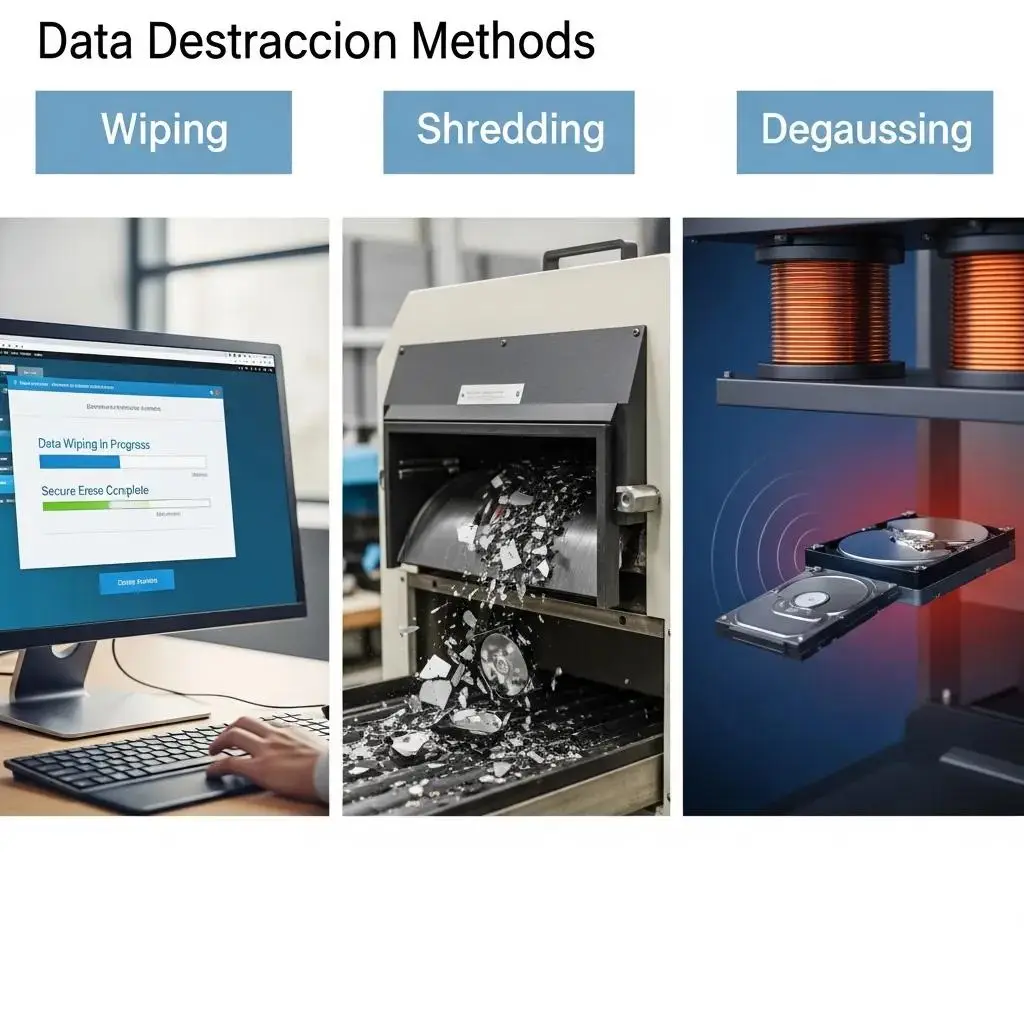
When it comes to data destruction, several methods are commonly used, including wiping, shredding, and degaussing. Each method has its advantages and is suitable for different types of media:
- Wiping: This method involves overwriting data on storage devices, making it unrecoverable. It is effective for hard drives and, with some limitations, for SSDs when using specialized software.
- Shredding: Physical destruction of devices, such as shredding hard drives, ensures that data cannot be retrieved. This method is often used for older or damaged equipment.
- Degaussing: This technique uses a powerful magnet to disrupt the magnetic fields on storage devices, effectively erasing data. It is effective for magnetic media such as traditional hard drives but is not effective for SSDs or optical media.
Understanding these methods allows organizations to choose the most appropriate data destruction strategy based on their specific needs.
What Are the Benefits of IT Asset Recovery and Remarketing Programs?

IT asset recovery and remarketing programs offer significant financial and environmental benefits for organizations. By recovering value from outdated equipment, businesses can offset disposal costs and contribute to sustainability efforts.
How Does IT Asset Remarketing Maximize Value Recovery?
IT asset remarketing involves reselling refurbished equipment to recover its value. This process not only generates revenue for organizations but also extends the lifecycle of IT assets, reducing waste. By partnering with ITAD providers that specialize in remarketing, businesses can maximize their return on investment while promoting environmentally responsible practices.
Which IT Equipment Types Are Eligible for Secure Remarketing?
Various types of IT equipment are eligible for secure remarketing, including:
- Computers and Laptops: These devices can be refurbished and resold, often fetching a good price in the secondary market.
- Servers: Older servers can be refurbished and resold, providing significant value recovery.
- Networking Equipment: Routers, switches, and other networking devices can also be refurbished and remarketed.
How Does Environmentally Compliant E-Waste Recycling Support Sustainability?
E-waste recycling is a critical component of ITAD services, ensuring that electronic waste is disposed of in an environmentally responsible manner. This process helps prevent harmful materials from entering landfills and promotes the recovery of valuable resources.
What Certifications Ensure Responsible E-Waste Recycling Nationwide?
Several certifications ensure that e-waste recycling is conducted responsibly, including:
- R2 Certification: This certification ensures that recyclers adhere to strict environmental and safety standards, promoting responsible recycling practices.
- e-Stewards Certification: This certification focuses on responsible recycling and the ethical treatment of e-waste, ensuring that materials are processed in a manner that protects human health and the environment.
These certifications provide organizations with confidence that their e-waste is being handled responsibly, aligning with sustainability goals.
How Does R2v3 Certification Prevent Landfill Waste?
R2v3 certification is the latest version of the R2 standard for responsible recycling that emphasizes the importance of reducing landfill waste. By adhering to R2v3 guidelines, ITAD providers can ensure that e-waste is recycled in a way that maximizes resource recovery and minimizes environmental impact. This certification is crucial for organizations looking to enhance their sustainability efforts and demonstrate their commitment to responsible e-waste management.
What Compliance and Regulatory Standards Govern Nationwide ITAD Services?
Compliance with regulatory standards is essential for ITAD services, as it ensures that organizations meet legal requirements related to data protection and environmental responsibility.
How Do HIPAA, GDPR, and CCPA Impact ITAD Compliance?
Regulations such as HIPAA, GDPR, and CCPA impose strict requirements on organizations regarding data protection and privacy. ITAD providers must ensure that their processes comply with these regulations to protect sensitive information and avoid legal penalties. For example, HIPAA requires healthcare organizations to implement safeguards for patient data, while GDPR emphasizes the need for data minimization and secure disposal. CCPA requires businesses to protect consumer personal information, including secure disposal of data-containing devices.
Why Are NAID AAA and ISO Certifications Critical for ITAD Providers?
NAID AAA and ISO certifications are critical for ITAD providers as they demonstrate adherence to industry best practices for data destruction and security. NAID AAA certification ensures that providers meet rigorous standards for data protection, while ISO certifications such as ISO 9001 (quality management) and ISO 27001 (information security management) indicate compliance with international quality and security management standards. These certifications provide organizations with assurance that their ITAD partner is committed to maintaining high levels of security and compliance.
How Are Nationwide IT Asset Logistics and Pickup Services Streamlined?
Efficient logistics and pickup services are essential for the success of nationwide ITAD operations. Streamlined processes ensure that assets are collected and disposed of securely and efficiently.
What Are the Best Practices for Multi-Site ITAD Logistics?
Best practices for multi-site ITAD logistics include:
- Centralized Management: Implementing a centralized system for tracking assets across multiple locations enhances visibility and control.
- Standardized Procedures: Establishing standardized procedures for asset pickup and disposal ensures consistency and compliance.
- Regular Audits: Conducting regular audits of ITAD processes helps identify areas for improvement and ensures adherence to compliance standards.
By following these best practices, organizations can optimize their ITAD logistics and enhance overall efficiency.
How Does Chain-of-Custody Documentation Ensure Secure Asset Tracking?
Chain-of-custody documentation is crucial for ensuring secure asset tracking throughout the ITAD process. This documentation provides a clear record of asset handling, from collection to disposal, ensuring that all assets are accounted for and that data security is maintained. By implementing robust chain-of-custody practices, ITAD providers can enhance trust and transparency in their operations.
EAV Table: IT Asset Recovery Methods
Different IT asset recovery methods deliver distinct benefits through specific mechanisms.
| Method | Description | Benefit |
|---|---|---|
| Remarketing | Reselling refurbished equipment | Financial recovery and waste reduction |
| Recycling | Processing e-waste for material recovery | Environmental sustainability |
| Donation | Giving usable equipment to non-profits | Community support and tax benefits |
List of Key Benefits of ITAD Services
ITAD services offer several key benefits that organizations should consider:
- Data Security: Ensures sensitive information is securely destroyed, reducing the risk of data breaches.
- Regulatory Compliance: Helps organizations meet legal requirements related to data protection and e-waste disposal.
- Environmental Responsibility: Promotes sustainable practices by recycling e-waste and reducing landfill impact.
Conclusion
In conclusion, nationwide IT asset disposition services are essential for organizations seeking to manage their IT assets securely and responsibly. By understanding the importance of ITAD, the benefits of certified data destruction, and the role of e-waste recycling, businesses can make informed decisions that protect their data, comply with regulations, and contribute to sustainability efforts. As the digital landscape continues to evolve, the need for effective ITAD solutions will only grow, making it imperative for organizations to prioritize these services in their asset management strategies.