
If your business has ever felt overwhelmed by hazardous waste regulations, the Universal Waste EPA program is designed to simplify things. Think of it as a streamlined, cost-effective "fast lane" for recycling common but hazardous items from your business, like old batteries, fluorescent lamps, and certain electronics. It offers a less complicated path than typical hazardous waste rules, making it easier for your company to manage these materials responsibly and stay compliant in 2026.
Decoding the EPA's Universal Waste Rules
The universal waste regulations aren't a free pass, but they represent a much smarter and more efficient system for handling specific waste streams common in commercial environments. The EPA created this program to encourage businesses to recycle materials that often pile up in storage rooms and warehouses. The primary goal is to cut down on complex paperwork, lower disposal costs, and, most importantly, keep hazardous items out of standard landfills where they can cause significant environmental harm.
This program applies to everyday items you’ll find in almost any office, data center, or industrial facility, including:
- Lamps: Fluorescent tubes from office ceilings, HID lamps from warehouses, and backlights in older LCD monitors.
- Batteries: This covers the full range, from lead-acid batteries in an uninterruptible power supply (UPS) to lithium-ion batteries in corporate laptops and standard alkaline batteries.
- Mercury-Containing Equipment: Many older facilities still use mercury thermostats, switches, pressure gauges, and relays.
- Aerosol Cans: Cans used by maintenance, IT, and janitorial teams for cleaning, lubrication, or other tasks fall under this category.
The Foundation of Simplified Management
The program's success is rooted in its streamlined approach. Established under 40 CFR Part 273 in 1995, the Universal Waste program fundamentally changed how businesses manage these common materials. A key provision allows businesses to store this designated waste for up to one year without needing complicated hazardous waste shipping manifests, a change that has dramatically improved collection and recycling rates. You can explore the specifics of this system in our guide on universal waste regulations.
This framework allows your business to consolidate materials in a designated, properly labeled area before sending them to a certified recycling partner.
By simplifying these rules, the EPA makes it practical for IT managers, facility coordinators, and business owners to achieve compliance without getting bogged down in red tape. It transforms a potential compliance headache into a manageable operational task.
This system is a perfect example of the circular economy in action, making it easier to recover valuable materials from our waste. This helps your business stay compliant while also contributing to a more sustainable, responsible process. This program has successfully kept tons of hazardous materials out of landfills. (Discover more insights about waste statistics on hwhenvironmental.com).
Identifying What Qualifies as Universal Waste
So, what exactly is universal waste, and how does it impact your business operations? Think of it as a special subcategory of hazardous waste that is so common in commercial settings that the EPA created streamlined rules to make it easier to manage and recycle.
Understanding these categories is the first step toward building a compliant and efficient disposal process for your enterprise. It requires looking beyond the regular trash and identifying the regulated materials hiding in your server rooms, storage closets, and maintenance areas.
The entire purpose of the EPA's universal waste program is to encourage proper recycling by making it less of a burden for businesses. The rules are intentionally designed to be simpler and more cost-effective to follow than standard hazardous waste regulations.

As this concept illustrates, the core idea is to simplify management, lower costs, and push businesses toward recycling instead of landfilling these items. It's crucial to remember that universal waste is still a type of hazardous waste, just with a different, more flexible set of rules. For more on the broader topic, this guide is a valuable resource: Understanding Hazardous Waste: What Qualifies and How Its Disposed Of Safely.
Core Federal Universal Waste Categories
The federal government recognizes several key categories of universal waste that you will almost certainly encounter in your facility.
- Batteries: This is a major category for any business. It covers heavy lead-acid batteries from data center UPS systems, lithium-ion batteries from company laptops, and even simple alkaline batteries from wireless keyboards and other office peripherals.
- Lamps: Consider all the lightbulbs in a commercial building. This includes long fluorescent tubes in office ceilings and high-intensity discharge (HID) lamps often found in warehouses or large-scale facilities.
- Mercury-Containing Equipment: Many older commercial and industrial buildings still have equipment containing mercury. Common examples include legacy thermostats, pressure gauges, and various industrial switches.
- Certain Pesticides: This category is more specific and typically applies to recalled or collected pesticides from commercial, agricultural, or institutional settings, not residential use.
A major update to these rules occurred on December 9, 2019, when the EPA officially added aerosol cans to the federal list. This was a game-changer for businesses with maintenance shops, manufacturing lines, and facilities management teams, making it much easier to recycle these cans instead of managing them as traditional hazardous waste.
State-Specific Additions: A Critical Distinction for Businesses
Here’s where compliance gets complex. The federal rules are only a baseline. Individual states have the authority to add their own items to the universal waste list, and many have done so.
This creates a patchwork of regulations across the United States. For example, some states classify all electronic devices (e-waste) as universal waste, while the federal program does not. Other states might add items like antifreeze or cathode-ray tubes (CRTs) to their state-specific lists.
For businesses operating in multiple states, a one-size-fits-all approach to compliance simply will not work. The table below illustrates how different state requirements can be from the federal standard.
Federal Universal Waste vs. Common State Additions
| Federal EPA Universal Waste | Examples of State-Added Universal Waste | Relevant Business Context |
|---|---|---|
| Batteries, Lamps, Mercury-Containing Equipment, Pesticides, Aerosol Cans | E-Waste (computers, monitors, TVs), Cathode Ray Tubes (CRTs), Antifreeze, Ballasts (from fluorescent lights) | Companies with locations in states like California, Washington, or Vermont must manage old IT hardware and other electronics under stricter, state-specific universal waste rules. |
This table highlights why staying on top of local regulations is non-negotiable. What is considered universal waste in California might be handled completely differently in Texas. This is a common compliance pitfall for businesses with a national footprint.
Navigating this regulatory landscape is complex. What works in one state could lead to a fine in another, which underscores the critical need for local expertise and a knowledgeable partner.
For a deeper dive into the specific criteria that define these materials, our article on the universal waste definition is an excellent resource. Ultimately, partnering with a certified ITAD vendor who understands these state-by-state differences is the most effective way to avoid costly mistakes and ensure full compliance.
Finding Your Place: Small vs. Large Quantity Handlers
The EPA’s Universal Waste rules are not one-size-fits-all. Your specific compliance duties depend on the quantity of waste your business accumulates on-site. The EPA created two main handler categories, and identifying which one your business falls into is the first step toward a sound waste management plan.
The key threshold is 5,000 kilograms, which is approximately 11,000 pounds. This single number is what separates Small Quantity Handlers of Universal Waste (SQHUs) from Large Quantity Handlers (LQHUs). Your status is determined by the total amount of universal waste you are holding at your facility at any given time.
The Simpler Path for Small Quantity Handlers (SQHU)
If your business never accumulates more than 5,000 kg of universal waste at one time, you are considered an SQHU. This is the most common classification, covering most small-to-medium-sized businesses, office buildings, retail stores, and smaller corporate IT departments.
Being an SQHU comes with significant advantages that simplify compliance:
- No EPA Notification: You do not have to formally notify the EPA that you are handling universal waste.
- No Manifests Required: When you ship universal waste to another handler or a recycling facility, you are not required to use a formal hazardous waste manifest.
- Simplified Recordkeeping: While maintaining internal records is a business best practice, the official regulatory requirements are far less stringent.
This streamlined process is by design. The rules, found under 40 CFR 273, allow smaller operations to store waste for up to one year without the burden of complex shipping documents. It’s ideal for an IT manager collecting old server batteries or a facility manager replacing fluorescent lamps. This framework eases the compliance burden for a wide range of organizations, from hospitals to schools. For a full rundown, the EPA offers detailed guidance. (Learn more about EPA's universal waste handler categories)
Added Responsibilities for Large Quantity Handlers (LQHU)
The moment your facility accumulates 5,000 kg or more of universal waste, you cross the threshold and become an LQHU. This category typically includes large-scale operations like major distribution centers, data center decommissioning projects, or large manufacturing plants.
Once you hit this threshold, your compliance responsibilities become more serious.
As an LQHU, your business is operating in a more formal regulatory environment. The EPA expects a higher degree of accountability to ensure those large volumes of waste are tracked precisely from cradle to grave.
LQHUs must meet several additional requirements:
- Obtain an EPA Identification Number: You must notify the EPA of your activities to receive a unique EPA ID Number for your site.
- Maintain Stricter Records: You are required to keep detailed records of every universal waste shipment sent and received. These records must be retained for at least three years.
- Employee Training: You must ensure that any employee who handles or manages universal waste is properly trained on handling procedures and emergency response.
Knowing your handler status is foundational. It directly impacts your legal obligations, the documentation you must maintain, and your strategy for staying compliant and avoiding potential fines.
Core Compliance: Storage, Labeling, and Timelines
Knowing your handler status is step one. The real work—and the real risk—lies in the day-to-day management of your universal waste. This is where the EPA’s rules become very practical for your team, covering how you store, label, and track everything.
Think of these requirements not as suggestions, but as non-negotiable elements of your compliance program. Getting them right is essential for avoiding environmental hazards and significant financial penalties.
The most important rule to remember is the one-year storage limit. As soon as you designate an item—like an old fluorescent bulb or a batch of used batteries—as waste, a clock starts ticking. You have exactly 365 days to get it to a certified recycler or another designated facility. This deadline is firm and ensures that waste continues moving through the recycling stream and doesn’t accumulate indefinitely on your site.

Labeling, on the other hand, is your first line of defense. It’s a straightforward but critical inventory system that keeps your employees safe and your business compliant. This isn’t just about being organized; it’s a legal requirement.
Essential Labeling Practices
Every container, pallet, or even individual item of universal waste must be clearly marked. This tells your employees, transporters, and inspectors precisely what’s inside, ensuring it’s handled correctly from start to finish. The EPA is specific about the required wording.
- For batteries: Mark the container with "Universal Waste—Batteries," "Waste Batteries," or "Used Batteries."
- For lamps: Label it "Universal Waste—Lamps," "Waste Lamps," or "Used Lamps."
- For mercury-containing equipment: Use "Universal Waste—Mercury-Containing Equipment" or "Waste Mercury-Containing Equipment."
In addition to identifying the waste type, you must also mark the container with the date you started collecting waste in it—the "accumulation start date." This serves as your proof to an inspector that you’re staying within the crucial one-year storage window. For a deeper dive, you can learn more about compliant universal waste labels and how to use them correctly.
Managing Damaged Universal Waste
Accidents happen. A box of fluorescent bulbs is dropped, or a battery casing cracks and begins to leak. When they do, the EPA has clear rules for containing the problem before it escalates.
The moment an item is damaged, the priority shifts to immediate containment. A cracked fluorescent tube or a leaking battery must be placed in a separate, closed, and structurally sound container to prevent mercury vapor or corrosive liquid from escaping.
For instance, if you have a pallet of old laptop batteries and you notice one that is swollen or leaking, that single battery must be immediately isolated. Place it in a sealed plastic bag or a small, durable container before returning it to the main accumulation container.
This simple action contains the hazard on the spot. It prevents you from having to manage the entire pallet under the far more complex and costly full hazardous waste regulations. Mastering these small, practical steps is key to running a smooth, risk-free operation.
How E-Waste and ITAD Fit Into Universal Waste Rules
This is often where the universal waste EPA program becomes a significant concern for IT, facilities, and EHS managers. While there isn't a federal category specifically labeled "e-waste," your retired business electronics are packed with components that fall squarely under universal waste rules. Understanding this connection is the key to compliant IT asset disposition (ITAD).
Consider a single retired corporate laptop. It’s not one item; it’s a bundle of regulated materials. The lithium-ion battery inside is universal waste. The LCD screen's backlights often contain mercury, making them universal waste lamps. The circuit boards can even hide mercury-containing switches or small batteries that also qualify.
The Compliance Puzzle of Corporate IT Assets
Every piece of IT equipment your business retires presents a similar challenge. The uninterruptible power supplies (UPS) in your data center are filled with heavy lead-acid batteries. Older servers and network switches may contain small mercury components. Disposing of these assets isn't as simple as calling a general recycler; it means managing each regulated component according to strict EPA and state-specific guidelines.
This creates a serious liability for businesses. If you hand off a pallet of old computers to an uncertified vendor, your company remains legally responsible for the proper disposal of every single battery, lamp, and mercury switch inside. Failure to ensure compliant handling can result in massive fines and severe damage to your company's reputation.
The real challenge of ITAD isn’t just disposing of the device. It's the de-manufacturing and proper management of its regulated universal waste components. This is a specialized task that demands certified processes and deep regulatory knowledge.
A professional ITAD partner like Beyond Surplus is your solution to this complex puzzle. We don't just haul away your old equipment; we assume the liability for every regulated part it contains. Our certified processes guarantee that each universal waste component is identified, segregated, and managed in full compliance with all federal and state regulations.
How a Certified ITAD Partner Protects Your Business
Working with a certified vendor transforms a complicated compliance burden into a secure, fully documented process. It is all about risk transference. When you partner with Beyond Surplus, you receive a clear chain-of-custody and detailed records that prove your assets were managed correctly from pickup to final disposition.
The table below provides a clear view of how common IT assets contain these regulated materials.
Universal Waste Components Inside Your IT Assets
This table identifies common corporate IT equipment and the specific universal waste materials they contain, helping IT and facility managers understand their disposal obligations.
| IT Asset | Potential Universal Waste Component | EPA Regulation |
|---|---|---|
| Laptops & Mobile Devices | Lithium-ion Batteries, Mercury-vapor lamps in older screens | 40 CFR Part 273 (Batteries, Lamps) |
| Servers & UPS Systems | Lead-Acid Batteries, Mercury Switches on circuit boards | 40 CFR Part 273 (Batteries, Mercury Equipment) |
| LCD/LED Monitors | CCFL Backlights (containing mercury), Circuit Board Batteries | 40 CFR Part 273 (Lamps, Batteries) |
| Network Switches & Routers | Button Cell Batteries, Mercury-containing components | 40 CFR Part 273 (Batteries, Mercury Equipment) |
This level of detail is exactly what is needed to maintain compliance.
This documentation, which includes Certificates of Destruction and Recycling, serves as your proof of due diligence. It demonstrates to auditors and regulators that you fulfilled your obligations under the universal waste EPA rules. For any business developing a comprehensive IT asset disposal strategy, understanding the universal waste system is a critical first step. By working with experts, you protect your company and ensure your end-of-life assets are managed responsibly.
Choosing a Partner for Compliant Waste Disposal
Ultimately, managing universal waste EPA rules and e-waste is about mitigating risk and avoiding costly fines. Between complex federal regulations and the patchwork of state-specific rules, it’s easy for a business to make a costly compliance error.
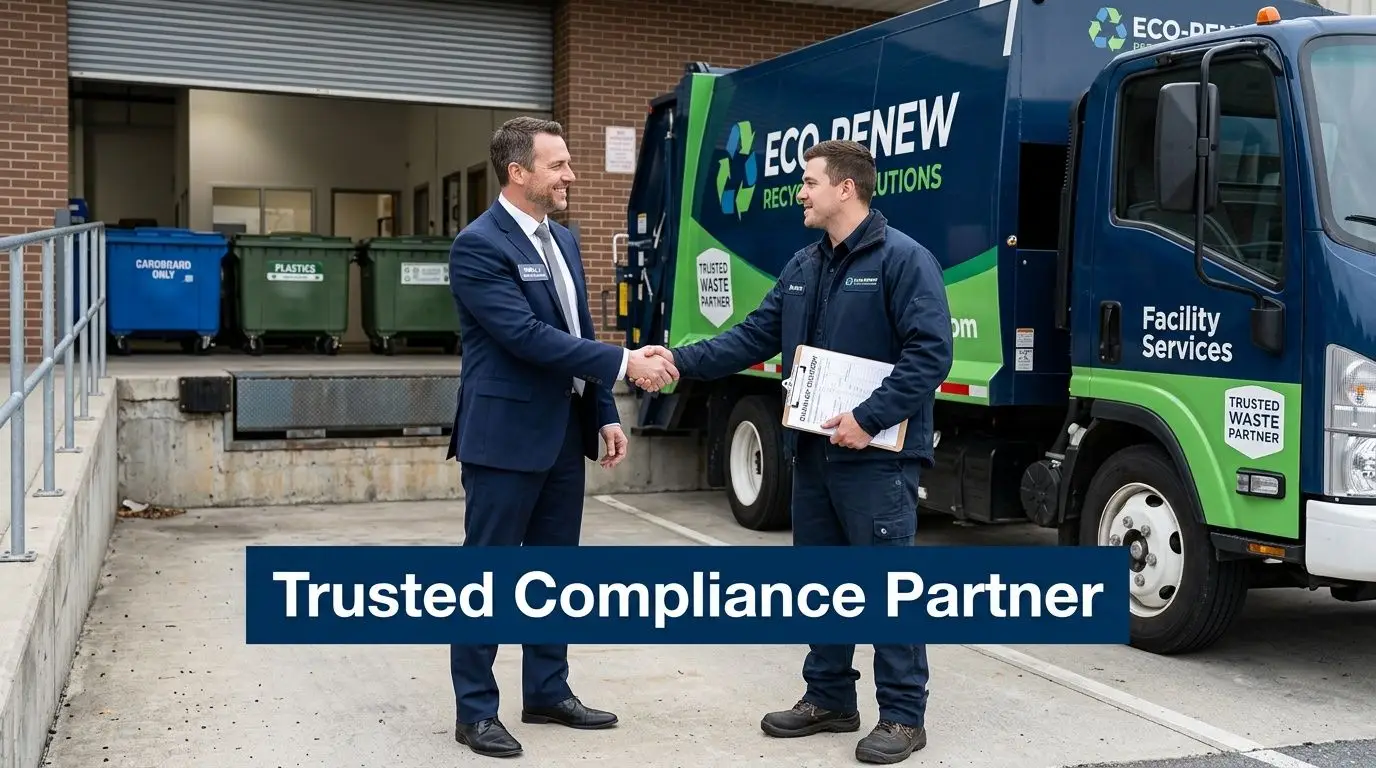
That's why engaging a professional ITAD partner isn't just a good idea—it's a critical safety net for your business. You are effectively transferring the burden of compliance to an expert whose sole focus is navigating these complex regulations. This is especially true for corporate IT assets, which are essentially containers for various regulated materials.
The Value of an Expert Partner
A true ITAD partner does far more than just pick up your old equipment. They provide a transparent, documented process that shields your business from regulatory penalties and protects your corporate reputation. This is the value a partner like Beyond Surplus brings to every engagement.
Here's what that looks like in practice for your business:
- Logistics Management: They handle everything, from coordinating secure, professional transport at your facility to ensuring all assets arrive safely at a certified processing plant.
- Guaranteed Compliance: With deep expertise in both federal and state universal waste rules, they ensure every item is managed correctly according to all applicable laws. No guesswork is involved.
- Secure Chain-of-Custody: You receive complete, end-to-end tracking of your assets. You will always know where your equipment is and exactly how it’s being handled, from your door to final disposition.
Documentation as Your Legal Safeguard
At the end of the process, the most important deliverable you will receive from a certified partner is the documentation. This paperwork is your official proof that you have met all your compliance obligations.
A Certificate of Destruction and Recycling is more than a piece of paper. It is the legal document that officially transfers liability from your company to your disposal partner, acting as your definitive shield against any future regulatory inquiries.
This certificate confirms that all components—from batteries and lamps to mercury-containing devices—were handled and processed in full compliance with EPA and state laws. It also serves as proof that every data-bearing device was properly destroyed, protecting your business from a potential data breach.
Performing due diligence on a potential partner is critical. Our vendor due diligence checklist can guide you through the essential questions to ask. Don't leave your company's compliance and reputation to chance; let an expert secure your operations.
Answering Your Top Universal Waste Questions
When businesses first begin managing universal waste regulations, many of the same practical questions arise. It’s a new compliance area for many IT, facility, and EHS managers, so having concerns is natural.
Let's address some of the most common questions to provide clear, straightforward answers.
Can Our Business Really Be Fined for Improper Universal Waste Disposal?
Yes, absolutely—and the fines can be substantial. Non-compliance with universal waste rules can lead to significant penalties, often reaching thousands of dollars per day, per violation.
These penalties vary by state and the severity of the violation, but they are designed to ensure these materials are managed correctly and do not cause environmental harm. Partnering with a certified vendor is your best defense against this significant financial and reputational risk.
When Does the One-Year Storage Clock Start?
The one-year accumulation clock starts ticking the moment an item is taken out of service and designated as waste. For example, the day you pull a dead fluorescent bulb from a fixture or decide a box of old laptop batteries is destined for recycling—that is Day 1.
This is precisely why proper labeling with an "accumulation start date" is so critical. It is the simplest and most effective way to prove to an inspector that you are managing your storage time limits correctly.
What's the Difference Between Universal Waste and Hazardous Waste?
This is an excellent question that gets to the heart of the regulations. All universal waste is technically a subcategory of hazardous waste. The "universal" label does not change the nature of the material itself, but it completely changes how you are permitted to manage it.
Think of it this way: Universal waste rules are an express lane for recycling. The EPA created this streamlined, alternative set of regulations to encourage more recycling of common hazardous items by making the process less complicated and expensive for businesses than standard hazardous waste protocols.
How Do I Find a Certified Facility for My Business's Universal Waste?
Your best course of action is to partner with a reputable, certified ITAD and electronics recycling provider. The key is to perform your due diligence: verify their certifications, such as R2v3 or e-Stewards, and always ask for proof of their downstream process, insurance, and data destruction capabilities.
This diligence ensures your waste is managed responsibly and securely from the moment it leaves your facility to its final disposition. It provides you with a complete, defensible chain-of-custody and total peace of mind.
Beyond Surplus offers certified electronics recycling and secure IT asset disposal services for businesses across the United States. Contact us today to ensure your universal waste is managed compliantly, securely, and professionally. Schedule your pickup or learn more at Beyond Surplus.